
I am usually so focused on Apple’s present and future that I don’t spend a lot of time ruminating about its past. And yet, as its 50th birthday has approached, it’s been impossible not to think Big Thoughts about the Big Picture.
So here’s one: Apple has been remarkably consistent — across 50 years and numerous CEOs and the vast sweep of late-20th- and early-21st-century history — in a few key areas. The people change (except Chris Espinosa!), but some of the ideas have managed to stay the same. And I think that’s meaningful.
Here’s what it boils down to: Apple is a company that chooses to build the whole product, while controlling its own destiny. That was true in the 1970s, it’s still true today, and it’s perhaps the company’s definitive trait.
In the olden days…
The early personal computer market was a hodgepodge. Different companies rose and fell, all offering different devices that were essentially self-contained and proprietary—compatibility across devices was almost nonexistent. Even programs written in the same language might not run across different systems, since they might each implement the languages differently.
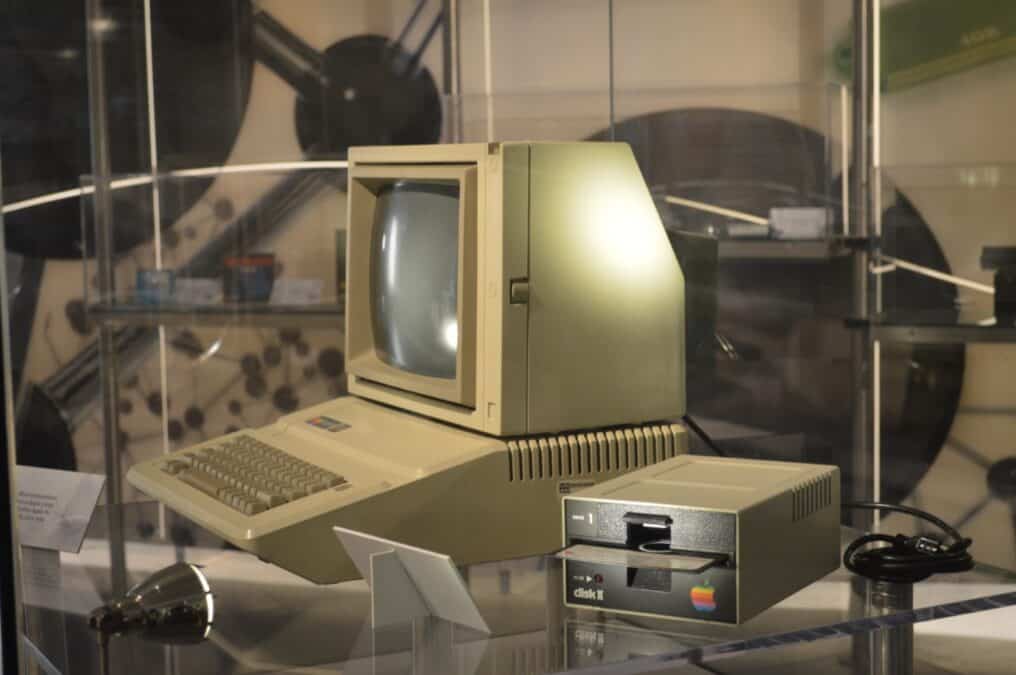
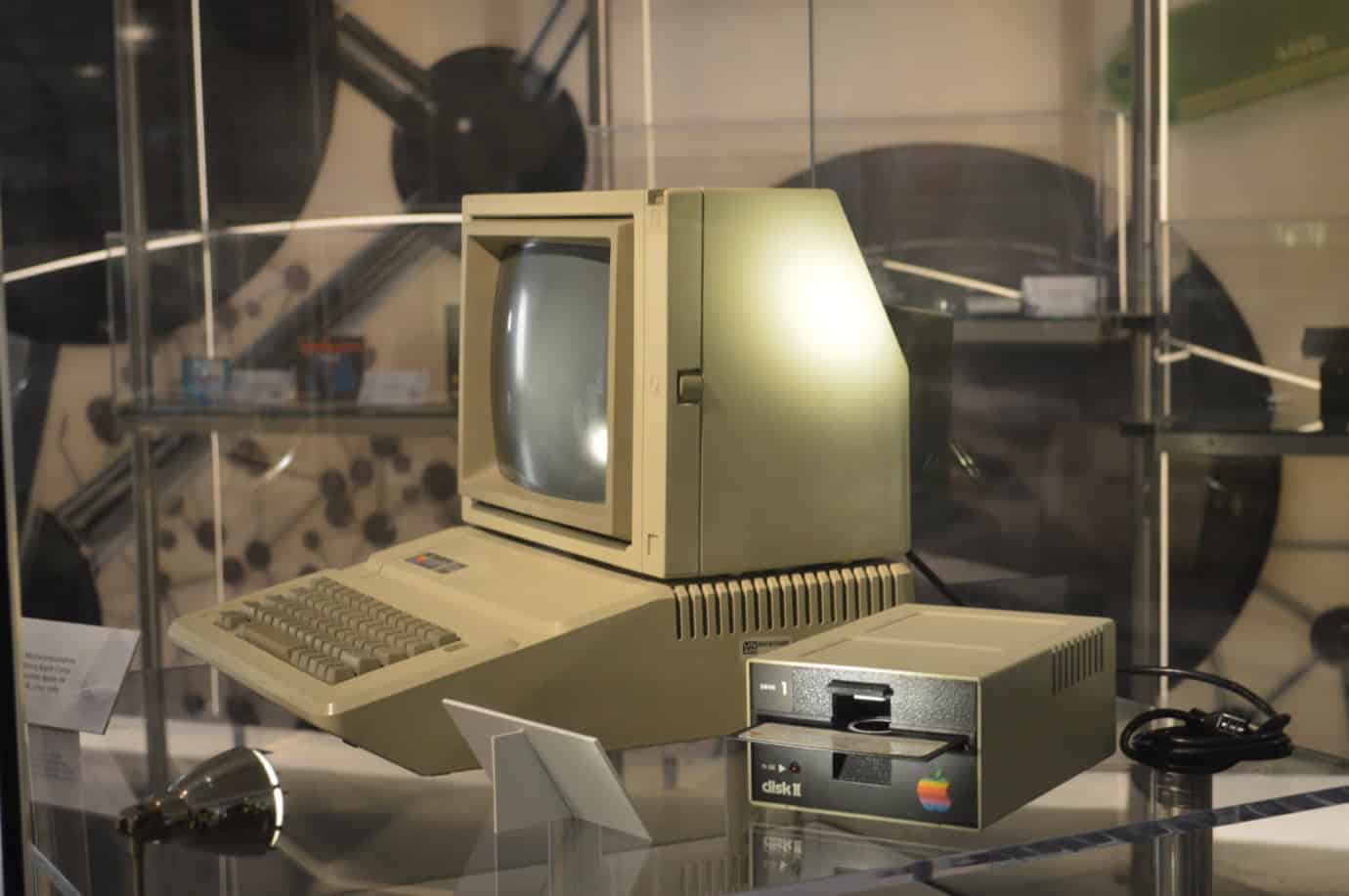
During those days, Apple was playing the game that pretty much everyone else does. Sure, there were some computers using the standardized CP/M operating system—you could install a card on an Apple II to let it run CP/M, even!—but mostly you got what you got when you bought the box. Apple IIs ran Apple stuff, TRS-80s ran TRS-80 stuff, the Atari 400 ran Atari stuff, Commodore PETs ran Commodore stuff… that was it.
But in the early 80s, almost the entire computer industry got flattened, and the reason was the IBM PC. Not that IBM did the flattening itself, but it had that effect: Since the IBM PC had been created using standard computer parts in order to get it out quickly, it became relatively easy for any other company to build equivalents. Its operating system was not actually owned by IBM, but was created by an upstart software company called Microsoft.
What happened next changed the entire computer market: Dozens of companies began making IBM PC compatible computers running MS-DOS from Microsoft. The generic Microsoft/Intel PC was born, and almost every other competitor was ruined. Atari and Commodore hung on for a while, but by the early ’90s, there were only pretty much two kinds of personal computers anyone would seriously consider buying: IBM PC compatibles running Microsoft software, or the Mac.
That was it. The rest of the market had capitulated. Only Apple hung on. And as someone who started writing about Apple during that time, I can tell you that nobody expected Apple to make it. Analysts either wrote that Apple should become like the other PC makers and just license Microsoft Windows, or that Apple should become like Microsoft and just license Mac OS to PC makers. Those were the choices.
Apple, to its immense credit, stayed true to itself. (Let’s not mention that brief dalliance with Mac clones.)
The whole widget

To me, this is the core of what Apple is as a company: It makes the whole product. It is not a licensee adding value, like so many of its competitors. This is an attitude that started with Woz designing the hardware and software to work together, leaving a deep impression on Steve Jobs. That impression combined with Jobs’s innate focus on creating a complete product (in an era where most computers were still sold as assemble-it-yourself “kits”) and created an enduring legacy.
People often call Apple’s obsession with owning and controlling the primary technologies behind its products the Cook Doctrine, after current CEO Tim Cook, but that’s a value that goes back to Steve Jobs. Among the more modern examples of this approach:
- Safari came to be because, as the Web rose to prominence, the Mac was increasingly judged based on its performance at Web browsing, and the default Mac browser was Microsoft’s Internet Explorer. Microsoft’s allocation of Mac development resources helped determined the success of Apple’s key product. That was a no-go.
-
iWork (Pages, Numbers, and Keynote) exist because it means that every Mac, iPhone, and iPad can work with Microsoft Office apps and documents right out of the box, without any extra purchase required. In releasing its own productivity suite, Apple provided instant Office compatibility and no longer needed to rely on Microsoft to do the right thing with its Mac software releases.
-
Apple silicon itself is Apple’s reaction to being held hostage by the long-term plans of chip suppliers who didn’t have Apple’s interests at heart. Every Intel chip that appeared in a Mac came from an Intel road map that was built based on the overall needs of the computer market, of which Apple was a tiny part. Every Apple silicon chip in a Mac comes from Apple’s own product road map, and the chip improvements are based entirely on Apple’s needs and synchronized with Apple’s software-development road map.
-
The C1/C1X chips that serves as the cellular connection in the iPhone 16e, iPhone 17e, iPhone Air, M4 iPad Air, and M5 iPad Pro—and will eventually power every new Apple device with cellular connectivity—is a reaction to Apple’s frustration with the dominant cellular radio provider, Qualcomm. Apple can now tune its own cellular chips to its own specific needs rather than relying on the parts Qualcomm builds for the entire market.
(Are AI models a primary technology? Who knows. Apple tried to build some, failed, and has decided to pivot to use Google’s AI models… for now. But if Apple ever feels that it absolutely has to have its own AI models running on its devices and in its data centers, I have no doubt that it will spend whatever it costs to make that happen. It’s just in the company’s DNA.)
You may have your own favorite examples of Apple going its own way, and counter-examples of Apple going with the crowd. Certainly, Apple has chosen to pick its battles. The G3 iMac, for example, dumped all the proprietary connectivity that Macs used to have, and just supported the industry-standard USB. Compatibility can be valuable to Apple, to a point. But beyond that point, the company knows it must go it alone—or it’ll end up being just another face in the crowd.
Over 50 years, that’s one thing that has remained true about Apple: You never forget that you’re using an Apple product. It doesn’t do generic—not in 1976, and not in 2026.